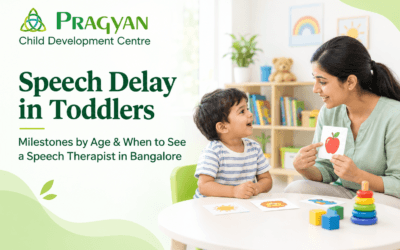
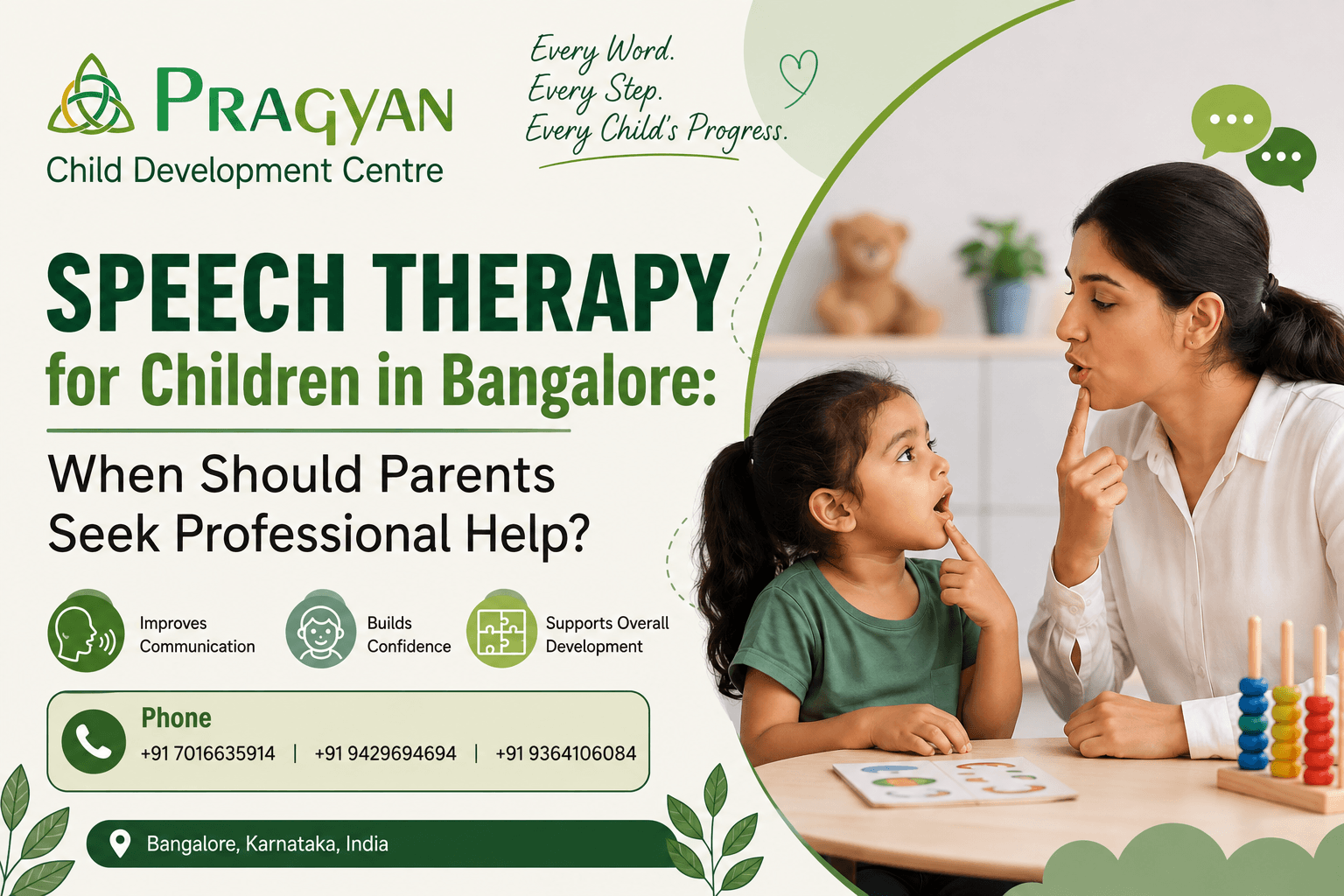
Watching your child utter their very first words is one of the most memorable milestones of parenthood. From early coos and soft babbles to complete sentences, communication opens up a world of learning, bonding, and emotional expression. However, every child develops at their own distinct pace. When a toddler remains quieter than their peers or struggles to articulate simple words, parents naturally feel concerned. Is it just a temporary delay that they will outgrow, or is it time to consult a professional?
In a fast-paced metropolitan city like Bangalore, parents navigate busy lifestyles, digital exposure, and multilingual households where Kannada, English, Hindi, and other regional languages overlap daily. Navigating these factors requires clarity. Seeking timely guidance through speech therapy for children in Bangalore can make a transformative difference in a child’s confidence, academic readiness, and social growth. This comprehensive guide details speech milestones, warning signs, local care pathways, and when to seek professional evaluation.
Understanding Early Communication Development in Children
Before evaluating whether a child requires intervention, it is essential to understand how speech and language develop. Though often used interchangeably, ‘speech’ and ‘language’ refer to distinct components of communication:
Speech: The physical production of sounds, including articulation, voice quality, rhythm, and fluency.
Language: The comprehension and use of words to share meaning. Receptive language involves understanding spoken instructions, while expressive language involves forming words and sentences to express thoughts.
When a child experiences a speech delay in children, they may understand concepts and directions perfectly well but struggle to produce clear verbal sounds. Conversely, a language delay may cause difficulty in combining words or comprehending conversational questions. Identifying which area requires support is the first step toward effective speech delay treatment.
Speech Milestones for Children: 6 Months to 5 Years
Tracking developmental milestones provides a reliable baseline for parents. While minor variations are entirely normal, tracking speech milestones for children helps identify when professional guidance is beneficial:
6 to 12 Months: Responds to voices, turns toward sounds, makes cooing sounds (‘oo’, ‘ah’), and laughs.
12 to 18 Months: Uses single words (‘mama’, ‘dada’, ‘bye’), imitates simple sounds, points to objects of interest, and understands simple commands like ‘come here’.
18 to 24 Months (Toddlerhood): Uses a vocabulary of 20 to 50+ words, combines two words together (‘more milk’, ‘go park’), points to body parts, and mimics everyday actions.
2 to 3 Years: Rapid vocabulary expansion (200+ words), uses 3-to-4 word sentences, asks ‘why’ questions, and is easily understood by familiar family members.
3 to 5 Years: Speaks in clear sentences, tells simple stories, understands time concepts (‘yesterday/tomorrow’), and talks fluently with peers and teachers.
Red Flags: Signs Your Child Needs Speech Therapy
Parents often wonder: what are the specific signs your child needs speech therapy? While children reach milestones at varied times, persistent hesitation or inability to communicate requires attention. Consider seeking a professional assessment if your child displays any of the following warning signs:
By 12 Months: Does not babble, point, or use gestures to express needs.
By 18 Months: Does not use at least 6 to 10 spontaneous single words or respond to their name.
By 24 Months: Does not combine two words naturally, relies solely on pointing or grunting to communicate, or has difficulty imitating sounds.
By 3 Years: Unfamiliar adults find it extremely difficult to understand their speech; the child displays frustration when trying to speak.
By 4 Years & Beyond: Struggles with sentence structure, repeats initial sounds persistently (stammering), or avoids speaking with peers.
When Should a Child See a Speech Therapist?
The short answer to when should a child see a speech therapist is: as soon as you observe persistent delays or notice significant stress around communication. Waiting for a child to ‘outgrow’ a delay can mean missing crucial early developmental windows.
Brain plasticity is highest during the early years (ages 1 to 5). Early intervention through speech therapy for toddlers establishes vital neural pathways for language acquisition, preventing secondary challenges such as academic difficulties, low social self-esteem, or behavioral frustration. Consulting an experienced speech therapist in Bangalore provides clarity through evidence-based assessments.
Causes of Speech Delay & Bangalore’s Multilingual Environment
Speech delays can stem from multiple factors, ranging from physiological conditions to environmental influences:
Hearing Impairment: Fluid accumulation or chronic ear infections can impair sound perception.
Oral Motor Challenges: Physical conditions like tongue-tie (ankyloglossia) or weak oral motor muscles.
Developmental Conditions: Speech delays frequently co-occur with Autism Spectrum Disorder (ASD), Global Developmental Delay (GDD), or ADHD.
Excessive Screen Time: Excessive screen time in early childhood reduces real-world human interaction necessary for natural speech acquisition.
Addressing Multilingualism in Bangalore Households
A frequent question among urban families is whether speaking multiple languages at home (such as Kannada, English, and Hindi) causes speech delay. Clinical evidence shows that exposure to multiple languages does NOT cause speech delays. A bilingual child may take a short time to process vocabulary across languages or temporarily mix words from different languages, but their total conceptual vocabulary across languages remains comparable to monolingual peers. If a child shows significant delays across ALL spoken languages, an evaluation by a child speech therapist in Bangalore is strongly recommended.
Why Choose Pediatric Speech Therapy in Bangalore?
Bangalore offers world-class pediatric healthcare facilities and specialized therapy hubs. Selecting specialized pediatric speech therapy Bangalore ensures your child receives care tailored to early childhood development.
Modern centers across hubs like Indiranagar, Koramangala, Whitefield, HSR Layout, and Jayanagar utilize play-based, child-centric techniques. Rather than repetitive drills, therapy sessions involve interactive storytelling, board games, sensory play, and oral motor activities. A qualified speech therapist in Bangalore collaborates closely with pediatricians, occupational therapists, and schools to ensure cohesive care.
What to Expect During a Speech Delay Treatment Session
If you schedule an initial visit for speech therapy for kids in Bangalore, here is what the clinical roadmap usually involves:
Comprehensive Evaluation: The therapist conducts a standardized clinical assessment (evaluating receptive/expressive vocabulary, articulation, and oral motor function) alongside informal observation through play.
Individualized Goal Setting: A customized therapeutic plan is created with achievable, age-aligned developmental goals.
Interactive Play Therapy: Sessions run for 45 to 60 minutes, utilizing toys, visual cue cards, sound games, and interactive digital aids to engage the child.
Parent Coaching: Parents are given simple activities to repeat at home, ensuring continuous progress between clinic visits.
How Parents Can Support Speech Therapy for Toddlers at Home
Therapy sessions lay the foundation, but parents are the primary drivers of everyday language learning. Here are effective home strategies:
Narrate Your Day: Describe daily activities out loud (‘Now we are peeling the banana’, ‘Look at the blue bus’).
Interactive Reading: Read picture books daily, asking open questions and pointing to illustrations.
Encourage Turn-Taking: Instead of predicting every need immediately, create opportunities for your toddler to request items verbally or through gestures.
Minimize Screen Time: Limit passive screen usage (TV, tablets, smartphones) and replace it with interactive human conversation and outdoor activity.
Conclusion: Empowering Your Child’s Voice
Every child deserves to feel heard, understood, and confident in their ability to express themselves. While every toddler grows at their own pace, early intervention remains the single most effective action parents can take when speech delay in children is suspected. By recognizing early signs, seeking guidance from a child speech therapist in Bangalore, and maintaining a language-rich environment at home, you provide your child with the foundation they need to thrive academically and socially.
FAQs:
1. What is the average cost of speech therapy sessions in Bangalore?
The cost of a pediatric speech therapy session in Bangalore typically ranges between INR 600 and INR 1,800 per session, depending on the clinic location, the specialist’s experience, and the duration of the diagnostic evaluation.
2. At what age should a child start speech therapy?
Speech therapy can begin as early as 18 to 24 months if significant red flags are present. Early intervention between ages 1.5 and 3 yields the best developmental outcomes.
3. Does growing up in a multilingual home in Bangalore cause speech delays?
No, exposure to multiple languages (e.g., Kannada, English, Hindi) does not cause speech delays. While bilingual children may mix vocabulary initially, total language comprehension remains on track.
4. How do I know if my 2-year-old has a speech delay?
A 2-year-old may have a speech delay if they speak fewer than 20 to 50 words, do not combine two words, struggle to imitate sounds, or do not use gestures to communicate.
5. What is the difference between a speech delay and autism spectrum disorder?
A speech delay specifically impacts speech production or language formulation. Autism spectrum disorder (ASD) involves broader challenges in social interaction, non-verbal communication, eye contact, and repetitive behaviors.
6. How long does speech therapy treatment usually take for children?
Therapy duration varies based on the child’s individual needs. Minor articulation adjustments may take 3 to 6 months, whereas broader language or developmental delays may require 12 to 24 months of consistent sessions.
7. Can excessive screen time cause speech delay in toddlers?
Yes, extensive research indicates that passive screen exposure in children under age 2 reduces face-to-face social interactions, which are essential for natural speech acquisition.
8. How can I find the best speech therapist in Bangalore near me?
Look for certified speech-language pathologists registered with RCI (Rehabilitation Council of India) located near major hubs like Indiranagar, Koramangala, Whitefield, HSR Layout, or Jayanagar.
9. What happens during a child’s first speech evaluation?
The speech therapist assesses the child’s receptive and expressive language skills, sound articulation, oral motor structure, and social communication through formal tests and play-based observation.
10. Is online speech therapy effective for kids?
Tele-therapy can be effective for older children (ages 4 and up) and parent coaching. However, hands-on, in-clinic therapy is generally recommended for toddlers under 3 years old.
11. What is the difference between speech delay and speech disorder?
A speech delay means a child is following normal development patterns but at a slower pace. A speech disorder involves disrupted speech sound patterns, stammering, or abnormal voice quality.
12. Will my child outgrow a speech delay without therapy?
While some children catch up naturally, waiting without a professional assessment can lead to academic frustration and social difficulty. Professional evaluation ensures timely care.
13. Can hearing loss cause speech delays in children?
Yes. Fluid buildup behind the eardrum or undetected hearing impairment directly affects a child’s ability to hear and mimic speech sounds clearly.
14. How many speech therapy sessions per week does a child need?
Most children attend 2 to 3 sessions per week, depending on the severity of the delay and the recommended treatment plan.
15. Does speech therapy help children with stammering or stuttering?
Yes, pediatric speech therapy provides specialized fluency techniques that help children manage stammering and build speech confidence.
16. Can speech therapy help with child feeding or swallowing difficulties?
Yes, certified speech-language pathologists are trained in oral-motor assessment and pediatric feeding and swallowing therapies.
17. How can parents practice speech exercises at home?
Parents can practice by narrating daily routines, reading interactive books, limiting screen time, singing rhymes, and asking open-ended questions during play.
18. Are speech therapy sessions covered by health insurance in India?
Coverage varies by policy provider. Many comprehensive health policies or specialized developmental care riders cover outpatient therapy sessions upon doctor recommendation.
19. What qualifications should a child speech therapist in Bangalore have?
Ensure your practitioner holds a Bachelor’s or Master’s degree in Audiology and Speech-Language Pathology (BASLP / MASLP) and is registered with the Rehabilitation Council of India (RCI).
20. How do I transition my child’s speech progress from clinic to school?
Speech therapists can provide home and classroom strategy sheets, collaborating directly with preschool teachers to ensure consistent speech encouragement in social environments.