In today’s hyper-connected digital age, smartphones, tablets, and televisions have become effortless digital babysitters. For busy families juggling fast-paced urban lifestyles in Bengaluru, handing over a glowing screen can feel like a quick way to soothe a fussy toddler or manage daily chores. However, pediatric researchers and speech-language pathologists are seeing a growing correlation between excessive passive screen time and communication hurdles in young children.
If you have noticed that your toddler is showing signs of a language lag, or if relatives are gently nudging you about a child not talking at 2 years, you are certainly not alone. At Pragyan Child Development Centre, a trusted child development centre in Bangalore, we help families navigate the delicate balance between modern technology and healthy early childhood communication.
Understanding How Toddlers Learn Language
Before examining digital impact, it helps to understand how young brains acquire language. Unlike adults, who learn passively through listening or reading, toddlers learn language actively and socially through a process called serve-and-return interaction:
Bidirectional Communication: A baby coos or points (the serve), and a caregiver responds with eye contact, words, and touch (the return).
Reading Non-Verbal Cues: Face-to-face interaction allows toddlers to study mouth movements, tongue placement, facial expressions, and emotional intonation.
Joint Attention: True language development happens when a child and caregiver share focus on the same physical object or real-world experience.
Passive screen media—such as flashing cartoons, fast-paced videos, and automated apps—breaks this critical cycle because it is a one-way street. The screen demands attention without offering genuine social feedback in return.
Screen Time Guidelines: What Do Experts Recommend?
Knowing how much screen time is safe helps parents set firm, healthy boundaries at home:
Under 18 Months: Zero screen time is recommended, with the sole exception of live video chatting (like video calls with grandparents) where real-time interactive conversation takes place.
18 to 24 Months: If introducing digital media, choose high-quality programming and always watch together, co-viewing and explaining what is happening on screen rather than leaving the child alone.
2 to 5 Years: Limit non-educational screen time to 1 hour per day or less, ensuring that high-quality media is accompanied by an adult who reinforces concepts.
The Link Between Excessive Screen Time and Speech Delays
When screen time exceeds healthy boundaries, it frequently manifests as developmental concerns that lead parents to seek speech therapy in Bangalore. Excessive digital consumption impacts toddlers in several key ways:
1. Reduced Opportunities for Conversational Practice
Every minute a child spends staring silently at a tablet is a minute lost from practicing back-and-forth vocalizations, babbling, and trying out new vocabulary words with caregivers.
2. Slower Expressive & Receptive Language Growth
Clinical studies consistently show that toddlers exposed to high volumes of handheld screen media before age two exhibit a significantly higher risk of expressive language delays. They may understand words passively (receptive language) but struggle to speak, form phrases, or use functional words to ask for what they need.
3. Reduced Attention Span & Eye Contact
Fast-paced digital animations can overstimulate a toddler’s developing nervous system. This often leads to reduced sustained attention in natural play settings, difficulty maintaining eye contact, and delayed joint attention skills.
4. Behavioral Outbursts During Transitions
Taking a tablet away from a toddler often triggers severe tantrums. When screens become the primary self-regulation tool, children miss out on developing healthy emotional regulation and coping mechanisms.
Red Flags: When to Seek Professional Support
While every child develops at their own unique pace, certain milestones should not be delayed. If you observe any of the following warning signs, it is wise to consult a specialist for a professional Developmental Assessment:
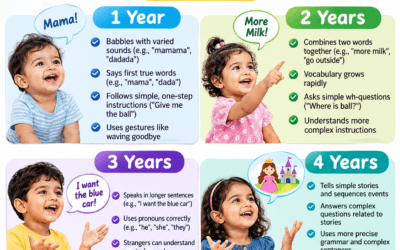
By 12 Months: No babbling, no pointing, and no response to their name.
By 15 Months: Total absence of single functional words (like “mama” or “ball”).
By 18 Months: Prefers using gestures over vocalizing, or struggles to understand simple one-step spoken instructions.
By 24 Months: Using fewer than 20–50 words or failing to combine two words together spontaneously (e.g., “more milk,” “want toy”).
Any Loss of Skills: Any sudden or gradual regression in speech, vocabulary, or social engagement at any age.
Actionable Steps for Bengaluru Parents: How to Cut Back Safely
Reducing screen dependency does not have to be an uphill battle. Here are practical strategies you can implement at home starting today:
Establish a “Cold Turkey” or Gradual Digital Fast: For extreme screen habits, a structured reset period helps recalibrate your toddler’s attention span. Expect a few days of fussiness as they adjust.
Create Screen-Free Zones: Designate meal times, car rides, and the hour right before bedtime as strictly screen-free zones to encourage conversation and calm winding down.
Be a Conversational Partner: When your child is playing, narrate their actions using self-talk and parallel talk (e.g., “You are building a tall red tower with blocks!”).
Offer Engaging Hands-On Alternatives: Substitute tablets with sensory bins, puzzles, shape sorters, coloring, and physical outdoor play in parks or apartment courtyards.
Incorporate Music and Rhymes: Sing traditional action songs and nursery rhymes together. Live human singing and rhythmic movement stimulate language centers far more effectively than recorded videos.
Multidisciplinary Care Across 13 Pragyan CDC Branches in Bangalore
If your toddler is experiencing speech delays, communication hurdles, or behavioral challenges related to screen overexposure, early professional guidance makes all the difference. Pragyan Child Development Centre provides comprehensive, multidisciplinary care across 13 convenient locations in Bangalore:
Specialized Clinical Services: We offer professional speech therapy in Bangalore, targeted pediatric occupational therapy in Bangalore, structured ABA therapy in Bangalore, and specialized Autism Early Intervention programs.
Citywide Accessibility: Families can easily access expert support across our widespread neighborhood branches:
North & Central Hubs: Centers offering speech therapy in Rajajinagar / Basavanagudi / Nagarbhavi / Kengeri / Yelahanka / RT Nagar.
East & South Corridors: Centers providing occupational therapy in Varthur / Kanakapura Road / Andrahalli / Nagasandra.
Outer Ring Road & West Suburbs: Established child development centre in Dasarahalli / Vajarahalli / Mahalakshmipuram / Konanakunte locations.
Targeted Support: Dedicated care including an autism therapy centre near Kengeri or Rajajinagar for families seeking specialized developmental support.
Frequently Asked Questions (FAQs)
1. Can a child’s speech delay be caused entirely by screen time?
While screen time alone may not be the sole root cause for every child, excessive passive screen exposure significantly exacerbates speech delays by replacing vital face-to-face conversational practice and social interaction.
2. How quickly do toddlers recover after cutting out screens?
Every child responds differently, but many parents notice improved eye contact, better attention spans, and increased vocalization within just 2 to 4 weeks of significantly reducing or eliminating daily screen time.
3. Are educational apps and videos helpful for toddler speech?
Under age two, toddlers learn language primarily through live human interaction, not digital screens. Even “educational” apps offer very limited language retention compared to reading a physical book or talking directly with a caregiver.
4. What is the difference between a speech delay and an autism spectrum disorder?
While speech delay involves slow language development, Autism Spectrum Disorder (ASD) encompasses broader social communication deficits, repetitive behaviors, and limited social reciprocity. A comprehensive Developmental Assessment at Pragyan CDC helps clarify exact diagnoses.
5. How do I book a consultation at Pragyan CDC?
You can easily Book a Consultation online or visit the Pragyan CDC branch closest to your neighborhood across Bangalore.
Take the First Step Today
If you are concerned about your toddler’s speech development or screen habits, timely professional support can change everything. Book a Consultation today with our expert team at Pragyan Child Development Centre and give your child the best foundation for lifelong communication!