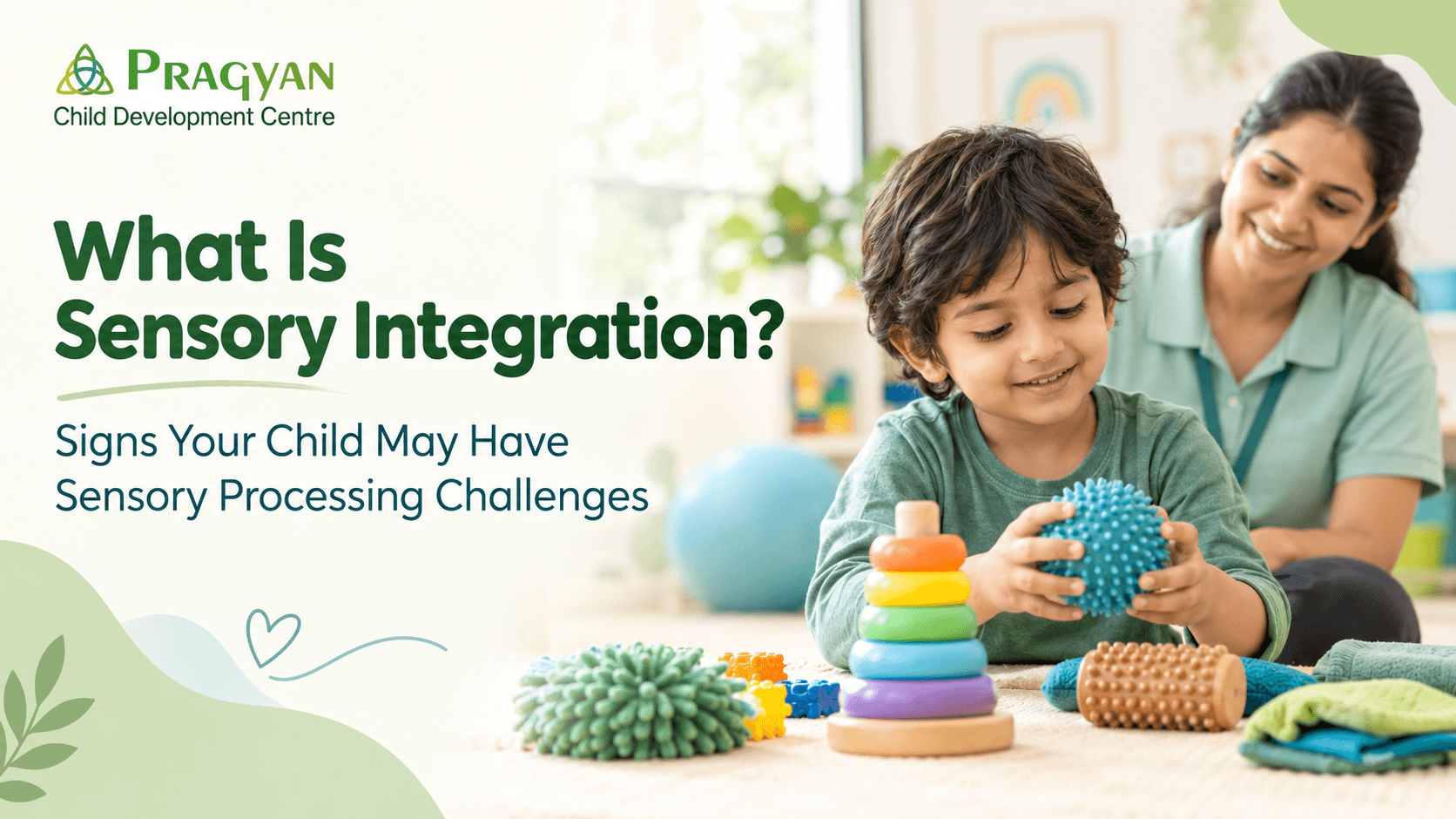
Every day, children are bombarded with an overwhelming amount of sensory information. From the hum of ceiling fans and the bright lights of a classroom to the scratchy feel of a new school uniform and the delicious smell of breakfast, our brains constantly take in, sort, and interpret signals from the world around us. For most children, this neurological filtering happens effortlessly. But for some children, the brain struggles to organize these signals properly leading to sensory processing challenges.
If your child frequently throws extreme tantrums in crowded supermarkets, covers their ears at the sound of a mixer grinder, refuses to wear certain clothes because “the seams hurt”, or seems constantly in motion and unable to sit still, you might be witnessing more than just “stubborn behavior” or “phases”. These can be hallmark signs of sensory processing differences.
For parents searching for expert occupational therapy for kids in Bangalore or specialized sensory integration therapy in Bangalore, understanding how the sensory system works is the first step toward helping your child thrive. This comprehensive guide explores what sensory integration is, how to identify sensory processing disorder symptoms, and how early professional support at a trusted child development centre in Bangalore can transform your child’s daily life. You can explore more about our core philosophy by visiting our Pragyan CDC Homepage.
What Is Sensory Integration and Why Is It Foundational?
Pioneered by occupational therapist and neuroscientist Dr. A. Jean Ayres, sensory integration is the neurological process that organizes sensations from one’s own body and the environment, making it possible to use the body effectively in the environment.
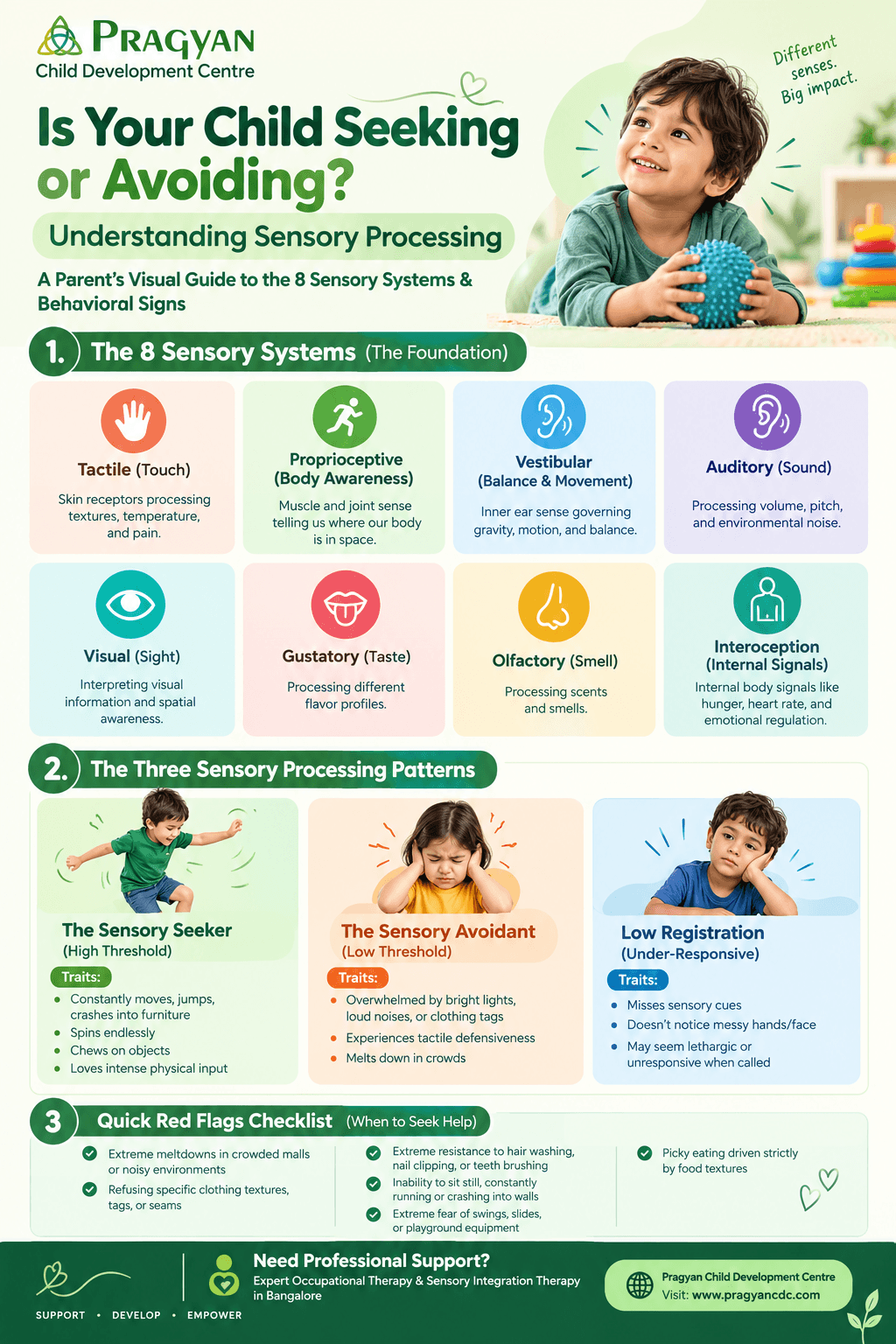
While most people are familiar with the five basic senses—sight, sound, smell, taste, and touch—pediatric occupational therapists look at eight distinct sensory systems. When these systems work in harmony, a child can focus, regulate their emotions, and learn effectively.
Sensory Processing Parent’s Guide
The 8 Sensory Systems Explained
Tactile System: The classic sense of touch through skin receptors, perceiving texture, temperature, and pain.
Proprioceptive System: The sense of body position and muscle/joint awareness, helping us know where our limbs are without looking.
Vestibular System: The sense of balance and spatial orientation located in the inner ear, governing movement and gravity.
Auditory System: The processing of auditory information and sound volume.
Visual System: Visual processing and spatial perception.
Gustatory System: Taste perception.
Olfactory System: Olfactory perception.
Interoceptive System: The internal sense of physiological conditions such as hunger, thirst, heart rate, and digestion, which is crucial for emotional self-regulation.
To discover how our specialists evaluate these systems, read more about our Pragyan CDC Programs & Consultations.
The Three Main Sensory Processing Patterns
When a child has a sensory processing disorder (SPD), their brain misinterprets everyday sensory input. Pediatric occupational therapists generally categorize these challenges into three primary behavioral patterns:
1. Sensory Seeking (Sensory Craving)
Children with sensory seeking behaviour in children have a high sensory threshold. Their brains do not register sensory input strongly enough, so they actively seek out intense sensations. They love crashing into furniture, jumping off couches, spinning endlessly without getting dizzy, chewing on shirt collars, or touching everything in sight.
2. Sensory Avoidant (Sensory Defensiveness)
Conversely, a sensory avoidant child has a very low sensory threshold. Everyday stimuli feel overwhelmingly intense. Bright fluorescent lights hurt their eyes, ordinary room sounds feel deafening, and certain clothing tags feel like sandpaper against their skin. These children often experience extreme tactile defensiveness and sensory overload.
3. Sensory Low Registration (Under-Responsive)
These children miss sensory cues entirely. They may not notice when their hands or face are messy, fail to respond when their name is called from across the room, or seem lethargic and indifferent to their environment.
Toddler & Child Sensory Sign Reference Guide
| Age / Developmental Stage | Common Behavioral Signs | Potential Sensory Challenge |
| Toddlers (1–3 Yrs) | Extreme resistance to hair washing, nail clipping, or teeth brushing; picky eating based on textures; extreme distress on swings. | Tactile and Vestibular Defensiveness (Sensory Avoidant) |
| Toddlers (1–3 Yrs) | Constant running, jumping, and crashing into walls; unable to sit still for a story; chews on non-food objects. | Proprioceptive & Vestibular Seeking (Sensory Seeker) |
| Preschoolers (3–5 Yrs) | Frequent meltdowns in crowded malls or noisy birthday parties; covers ears constantly; bolts from loud noises. | Auditory Over-Responsivity / Sensory Overload |
| School-Age (5+ Yrs) | Slumps over desk; struggles with handwriting pressure (too hard or too light); clumsy coordination; frequent collisions with peers. | Proprioceptive & Vestibular Processing Difficulty |
To understand our complete spectrum of clinical offerings, check out the comprehensive list on our Pragyan CDC Services Overview.
Understanding Tactile Defensiveness and Sensory Overload in Kids
Among various sensory challenges, tactile defensiveness is one of the most visible in young children. The skin is our largest sensory organ, and when tactile processing is impaired, non-threatening touch is registered by the brain as a threat or danger. This triggers an involuntary “fight-or-flight” response.
Everyday Manifestations of Tactile Defensiveness
Refusing to wear clothes with tags, seams, or tight waistbands; demanding loose cotton garments.
Melting down during hair brushing, face washing, or bath time.
Extreme aversion to getting hands messy with finger paints, clay, or sand during school art activities.
Picky eating habits driven purely by food textures (mushy vs. crunchy).
When sensory input accumulates beyond a child’s capacity to process it, it leads to sensory overload in kids. In public places like shopping malls, busy traffic junctions in Bangalore, or crowded classrooms, an overloaded child may experience sudden emotional meltdowns, aggression, or absolute withdrawal. Parents often mistake these episodes for temper tantrums, when in reality, the child is experiencing neurological distress.
For families navigating early developmental differences, our specialized Pragyan CDC Early Intervention Guide provides a roadmap for timely support.
What to Expect During Sensory Integration Therapy in Bangalore at Pragyan CDC
If your child exhibits persistent signs of sensory processing difficulties, seeking professional guidance from a qualified pediatric occupational therapist Bangalore is essential. At Pragyan Child Development Centre, our sensory integration therapy in Bangalore follows an evidence-based, clinical roadmap:
Comprehensive Occupational Therapy Evaluation: Our certified therapists conduct standardized clinical observations, sensory profile questionnaires, and play-based assessments to identify precisely which sensory systems are under- or over-reactive.
Specialized Sensory Gym Intervention: Therapy takes place in our fully equipped sensory integration gym. Using specialized apparatus—such as suspended platform swings, therapy balls, climbing walls, and tactile obstacle courses—our therapists provide controlled vestibular, proprioceptive, and tactile input in a fun, play-based environment.
Multidisciplinary Co-Therapy: Sensory processing challenges frequently overlap with speech delays or motor coordination issues. As a leading OT centre for children in Bangalore, Pragyan CDC ensures seamless co-therapy, collaborating closely with speech-language pathologists and behavioral specialists under one roof. If your child also experiences communication hurdles, review our dedicated Pragyan CDC Speech Therapy Page.
5 Practical Sensory Strategies Parents Can Use at Home
While professional intervention at a specialized clinic is irreplaceable, daily home routines can be tailored to support your child’s sensory regulation:
Incorporate “Heavy Work” Activities: Heavy work activities (pushing a heavy laundry basket, pulling resistance bands, animal walks) calm the nervous system through deep proprioceptive input.
Create a Calm-Down Sensory Corner: Set up a quiet, low-lit nook with soft cushions, weighted blankets, and noise-canceling headphones where your child can retreat when experiencing sensory overload.
Desensitize Tactile Aversions Gradually: Introduce sensory bins filled with dry beans, rice, or kinetic sand gradually, allowing your child to explore tactile textures at their own comfortable pace.
Provide Predictable Transitions: Establish predictable visual schedules and transition warnings to reduce anxiety related to unexpected sensory changes.
Minimize Screen Time and Maximize Outdoor Play: Limit passive tablet time and encourage outdoor active play to naturally stimulate vestibular and proprioceptive systems.
To read more expert articles, parenting tips, and clinical insights, explore our central Pragyan CDC Blog Hub.
Accessing Pediatric Occupational Therapy Across Bangalore Neighborhoods
At Pragyan Child Development Centre, we understand that accessibility is crucial for families committing to consistent therapy schedules. Our specialized neighborhood centers ensure expert occupational therapy near me searches lead directly to top-tier care:
OT Centre in Basavanagudi: Providing expert pediatric OT and sensory gyms for families across South and Central Bangalore. You can view our local contact details on the Pragyan CDC Basavanagudi Branch Page.
OT Centre in Rajajinagar & Mahalakshmipuram: Delivering specialized sensory integration therapy for toddlers and school-age children in West Bangalore. Check out our branch info on the Pragyan CDC Rajajinagar Branch Page.
OT Centre in Nagarbhavi & Kengeri: Offering state-of-the-art sensory processing disorder treatment in Nagarbhavi and Kengeri. Find directions via the Pragyan CDC Nagarbhavi Branch Page.
OT Centre in Vajarahalli / Kanakapura Road: Conveniently accessible for families residing along the Kanakapura Road corridor.
OT Centre in Nagasandra / Yeshwanthpur, Andrahalli & Dasarahalli: Serving North-West Bangalore communities with advanced pediatric occupational therapy.
To find the closest facility to your home, view our complete network of neighborhood clinics on the Pragyan CDC Locations Directory.
Frequently Asked Questions (FAQs)
1. What is sensory integration and why is it important for children? Sensory integration is the neurological process that organizes sensations from the body and environment, making it possible to use the body effectively. Proper sensory integration is foundational for motor skills, emotional regulation, and academic learning.
2. What are the common sensory processing disorder symptoms in children? Common symptoms include extreme sensitivity to loud sounds or bright lights (tactile or auditory defensiveness), constant seeking of movement or crashing into objects, meltdowns in crowded places, and difficulty with fine motor tasks like writing or buttoning shirts.
3. How do I identify sensory processing disorder in toddlers? Toddlers with sensory processing issues may show extreme resistance to hair brushing, nail clipping, or clothing tags, refuse certain food textures, have frequent meltdown tantrums in public, or display intense fear of swings and playground equipment.
4. What is the difference between sensory seeking and sensory avoidant behaviors? A sensory-seeking child constantly craves intense physical input (jumping, spinning, crashing, chewing), whereas a sensory-avoidant child is overly sensitive to sensory stimuli and actively withdraws from bright lights, loud noises, or messy textures.
5. What is tactile defensiveness and how does it affect a child? Tactile defensiveness is an over-reactivity to ordinary touch sensations. Children with tactile defensiveness may panic when hugged, refuse specific clothing fabrics, throw tantrums during baths, or dislike getting hands messy during art activities.
6. Where can I find occupational therapy for kids in Bangalore? Pragyan Child Development Centre offers specialized occupational therapy for kids in Bangalore, featuring state-of-the-art sensory integration gyms across multiple neighborhood branches.
7. What is sensory integration therapy in Bangalore and how does it work? Sensory integration therapy involves structured, play-based activities directed by a pediatric occupational therapist using specialized equipment like suspended swings, ball pits, and tactile obstacle courses to help the brain properly process sensory input.
8. How do I choose the best OT centre for children in Bangalore? Look for a certified pediatric occupational therapist, specialized sensory gyms equipped with Ayres Sensory Integration (ASI) apparatus, and a multidisciplinary team at a trusted facility like Pragyan CDC.
9. Can sensory processing issues improve with early intervention? Yes! Early intervention during the formative preschool years (ages 2 to 6) utilizes neuroplasticity to help children’s brains adapt, significantly improving their ability to self-regulate and participate in daily activities.
10. What causes sensory overload in kids and how can parents manage it? Sensory overload occurs when the brain is bombarded with more sensory input than it can process (e.g., noisy malls, bright classrooms, crowded birthday parties). Parents can manage it by creating quiet sensory-calming corners, using noise-canceling headphones, and providing deep pressure input.
11. How is pediatric occupational therapy different from physical therapy? While physical therapy primarily focuses on gross motor skills, strength, and mobility, pediatric occupational therapy focuses on enabling children to successfully participate in daily occupations—including self-care, school tasks, play, and emotional self-regulation.
12. Is occupational therapy near me available across Bangalore neighborhoods? Yes, Pragyan CDC provides accessible pediatric occupational therapy and sensory integration therapy near me queries across major Bangalore localities including Basavanagudi, Rajajinagar, Mahalakshmipuram, Nagarbhavi, Kengeri, and Whitefield.
13. How long does sensory processing disorder treatment in Bangalore typically take? Treatment duration varies based on the severity of sensory challenges and consistency of therapy. Many children show noticeable functional improvements in self-regulation and focus within 6 to 12 months of structured therapy.
14. How do I book an initial sensory evaluation at Pragyan Child Development Centre? You can easily schedule a comprehensive assessment by visiting Pragyan CDC Website or contacting our center directly to speak with our clinical pediatric team.
Conclusion: Empower Your Child’s Sensory Journey with Pragyan CDC
Recognizing that your child struggles with sensory processing challenges can feel daunting, but it is also the first empowering step toward meaningful change. With the right therapeutic guidance, children with sensory processing differences can learn to regulate their nervous systems, focus better in school, and navigate everyday environments with confidence.
Whether you are looking for occupational therapy near me or specialized sensory integration therapy near me, Pragyan Child Development Centre is here to support your family every step of the way.
Take Action Today for Your Child’s Sensory Success: Don’t wait and wonder. Contact Pragyan Child Development Centre today to schedule a comprehensive occupational therapy and sensory evaluation with our expert pediatric team in Bangalore.
🌐 Visit Website: https://www.pragyancdc.com/
📞 Book an Assessment: Visit our website to locate your nearest branch and schedule a consultation.