For parents of children on the autism spectrum, watching a child struggle with simple daily routines like buttoning a shirt, coping with loud noises, or making friends at school can be emotionally challenging. Autism Spectrum Disorder (ASD) is a complex, multifaceted neurodevelopmental condition. It manifests uniquely in every child, often affecting how they perceive sensory information, coordinate physical movements, and interact with the world around them. When navigating this journey, finding a structured, scientifically backed path toward independence is paramount.
This is where occupational therapy for autism serves as an indispensable bridge. Rather than focusing solely on academic benchmarks, occupational therapy (OT) targets the practical, real-world skills children need to thrive at home, in the classroom, and within their social circles.
As the premier child development centre in Bangalore, Pragyan CDC is dedicated to delivering specialized, highly individualized pediatric programs that unlock every child’s full potential. In this comprehensive guide, we explain the core autism occupational therapy benefits, detail clinical approaches, and show why starting early can rewrite your child’s developmental trajectory.
What is Occupational Therapy for Autism?
Occupational therapy is a specialized healthcare field designed to help individuals acquire or regain the functional skills necessary for daily living. In pediatric care, a child’s “occupations” are not jobs; rather, they are play, self-care routines, social interactions, school readiness, and basic environmental adaptations.
When applied to autism, OT focuses on evaluating and addressing the sensory, physical, cognitive, and social barriers that disrupt a child’s life. Rather than employing a one-size-fits-all methodology, registered Occupational Therapists design custom treatment pathways tailored to each child’s physiological baseline, developmental milestone gaps, and unique personality. By systematically breaking down barriers, OT enables children with ASD to navigate their worlds with increased confidence and decreased anxiety.
The Scientific Core: Standardized OT Screening Tools
At a leading clinical facility like Pragyan CDC, therapy does not rely on guesswork. It begins with a comprehensive 60-minute diagnostic intake evaluation utilizing globally recognized, standardized assessment and screening tools to map the child’s exact strengths and deficits:
The Sensory Profile Checklist / Sensory Profile 2: This assessment evaluates a child’s sensory processing patterns (hyper-reactivity or hypo-reactivity) across auditory, visual, tactile, vestibular, and proprioceptive inputs. It helps pinpoint exact sensory triggers causing dysregulation.
CARS (Childhood Autism Rating Scale): A diagnostic assessment tool that helps identify and qualify the severity of autistic behaviors, allowing therapists to track behavioral changes and developmental progress objectively over time.
BOT-2 (Bruininks-Oseretsky Test of Motor Proficiency): A highly precise, standardized test that measures a wide range of motor skills, assessing both fine motor precision and gross motor coordination.
Major Autism Occupational Therapy Benefits Explained
Occupational therapy offers holistic, long-lasting benefits that ripple across every domain of an autistic child’s daily life. Below are the key clinical areas of improvement:
1. Sensory Processing and Integration
Up to 90% of children with autism experience sensory processing issues. Some are hypersensitive (over-responsive to sounds, bright lights, or textures), while others are hyposensitive (under-responsive, seeking intense sensory input like constant movement or deep pressure). Sensory overload often triggers severe anxiety, executive fatigue, or behavioral meltdowns.
Through Sensory Integration Therapy Bangalore at Pragyan CDC, children engage in structured sensory play inside custom sensory gymnasiums. Utilizing specialized equipment like vestibular swings, tactile exploration walls, and custom crash pads, therapists teach the brain how to naturally organize, interpret, and respond to environmental stimuli. This directly stabilizes the child’s sensory baseline, reducing meltdowns and boosting focus.
2. Refinement of Fine Motor Skills and Handwriting
Fine motor challenges are common in autism, often making classroom tasks frustrating. Children may experience hidden hand fatigue, poor finger dexterity, or struggles with bilateral coordination (using both hands together).
OT sessions target fine motor refinement using highly engaging, playful exercises. Activities include completing puzzles, using adapted safety scissors, manipulating therapeutic putty, and utilizing tweezers for object sorting. These build wrist stability, precise finger-pinch strength, and correct pencil grasps, eliminating physical discomfort and enabling smoother school integration.
3. Strengthening Gross Motor Skills and Postural Control
Gross motor development focuses on larger muscle groups that control posture, balance, and whole-body coordination. Children with ASD may present with weak core muscles or limited body awareness (proprioception), causing clumsy gaits or difficulty sitting upright at a school desk.
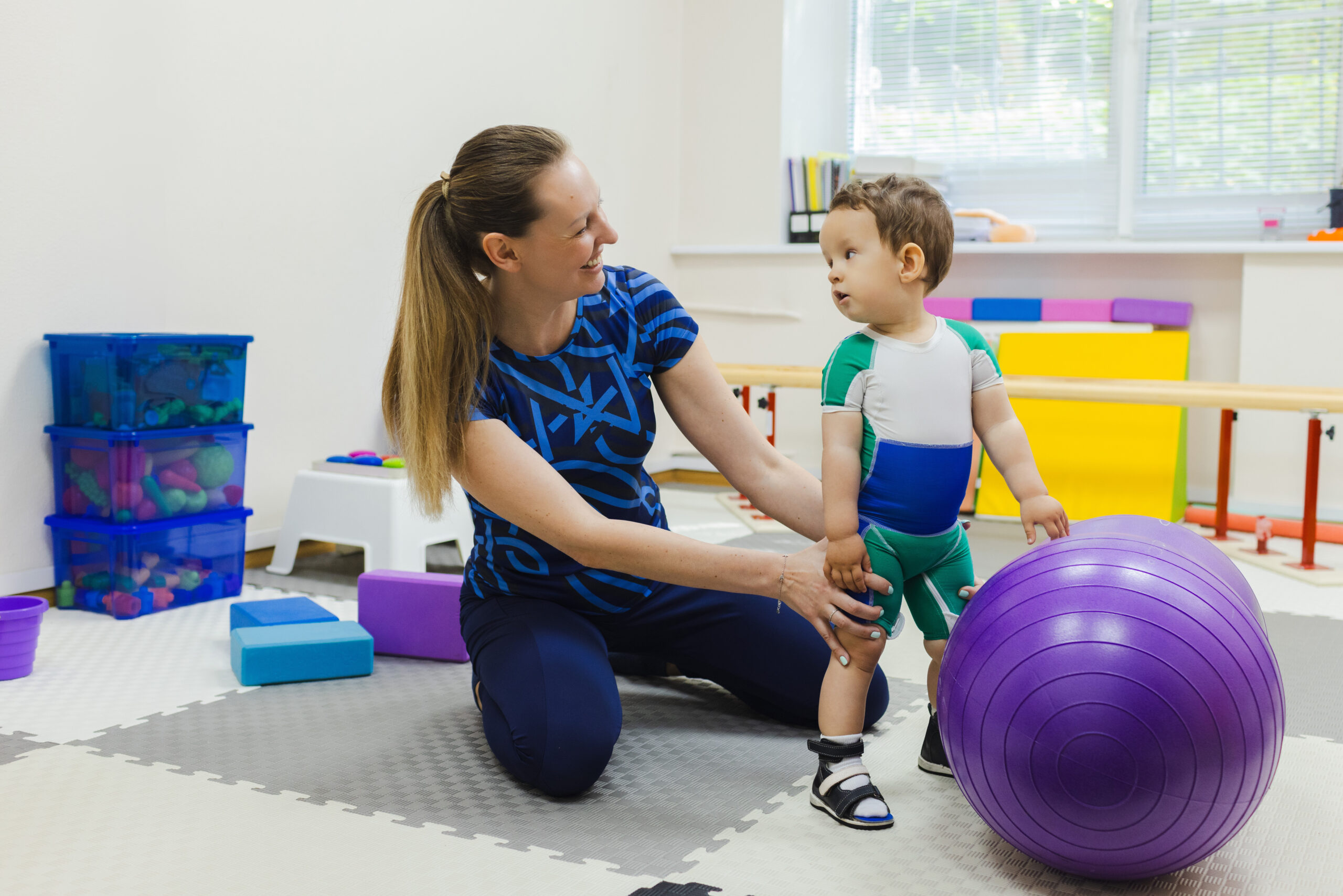
Occupational therapists design strength-building activities like crawling through obstacle courses, balancing on stability balls, and throwing or catching weighted balls. These activities improve gross motor planning, physical balance, and core strength, giving children the physical confidence to participate in playground games and active peer play.
4. Mastery of Activities of Daily Living (ADL) and Self-Care
A core pillar of occupational therapy for autism is fostering functional independence. Therapists work systematically on Activities of Daily Living (ADLs), such as feeding themselves, dressing, grooming, and personal hygiene.
Using task analysis, therapists break down complex tasks like brushing teeth or tying shoes into minor, manageable, sequential steps. Guided by visual schedules and structural cues, children learn to complete these tasks independently. This greatly reduces daily caregiving stress and builds invaluable self-esteem in the child.
5. Emotional Regulation and Coping Mechanisms
Emotional dysregulation and sudden mood swings are frequently observed in children with autism when they face transitions, changes in routine, or sensory overstimulation.
OT equips children with positive coping strategies and sensory diets personalized schedules of sensory activities designed to keep them calm and alert throughout the day. By learning to recognize their body’s warning signs, children gain executive control over their emotional state, preventing meltdowns before they occur.
6. Social Interaction and Play Skill Development
Play is a critical vehicle for early childhood development. Children on the spectrum often struggle with cooperative play, understanding social boundaries, or interpreting non-verbal cues.
Through structured peer group sessions and role-playing, occupational therapists teach turn-taking, cooperative play, and appropriate communication. This builds a natural pathway for establishing meaningful friendships and overcoming social anxiety.
The Developmental Journey: How OT Adapts Across Life Stages
A major clinical advantage of autism occupational therapy benefits is that the therapy naturally evolves along with the individual’s growth. Occupational therapy is not a static program; it dynamically adapts to meet the changing needs of the individual across key life stages:
| Life Stage | Focus Areas & Clinical Targets |
Early Childhood (Ages 1–5) | Early intervention focus: play-based sensory integration, basic motor milestones, and foundational self-care skills (e.g., independent feeding). |
School-Age (Ages 6–12) | Shift to classroom survival: handwriting endurance, following multi-step visual routines, managing attention spans, and interactive peer play. |
Adolescence & Adulthood (Ages 13+) | Transition to high-level independence: executive functioning, independent household management, safe navigation of public transit, and workplace/vocational readiness. |
The Multidisciplinary Synergy at Pragyan CDC Bangalore
At Pragyan CDC, we recognize that treating developmental concerns in isolated clinical silos is highly ineffective. A child who struggles with speech may actually be suffering from an underlying sensory overload; similarly, behavioral non-compliance is frequently a response to physical or communication frustration.
Our advanced, unified clinical model integrates the Best Pediatric Occupational Therapy in Bangalore with speech-language pathology, behavior modification (ABA), and academic shadow teaching.
How it works in practice: Our registered occupational therapist can stabilize a child’s sensory baseline in our specialized sensory room before they begin their speech therapy session on-site. This multidisciplinary collaboration drastically reduces behavioral frustration and accelerates the acquisition of real-world milestones.
School Readiness & Classroom Integration in Bangalore
Transitioning into Bangalore’s highly competitive and fast-paced academic environments can be exceptionally daunting for an autistic child. Pragyan CDC offers a specialized, rigorous school readiness program focused on building classroom sitting tolerance, sustained attention spans, and social interaction skills.
To ensure seamless clinic-to-classroom success, we provide an exclusive Shadow Teaching Service. A trained therapeutic professional can accompany your child directly into their mainstream classroom. They simplify instructions in real-time, manage sensory triggers safely, and guide social boundaries using a strict clinical fading protocol gradually stepping back as your child establishes complete functional autonomy.
Conclusion: Empowering Your Child’s Journey to Autonomy
Early clinical intervention remains the single most critical factor in maximizing developmental outcomes for children on the autism spectrum. While autism is a lifelong neurological difference, occupational therapy provides the vital keys to unlocking maximum independence, self-confidence, and a higher quality of life.
If you observe any early signs of sensory issues, motor delays, or behavioral challenges in your child, do not take a “wait-and-see” approach. Pragyan CDC, the premier child development centre in Bangalore, operates across 13 highly accessible neighborhood hubs across South, North, and East Bengaluru.
Reach out to Pragyan CDC today to schedule a comprehensive diagnostic intake evaluation, and take the first step toward a brighter, more independent future for your child.
Frequently Asked Questions
Q1: What are the main benefits of occupational therapy for children with autism?
Occupational therapy offers comprehensive, life-changing benefits for children with autism. It improves sensory processing and integration, enhances fine motor skills (like handwriting and buttoning), refines gross motor coordination (balance and posture), fosters independence in activities of daily living (ADLs like dressing and self-feeding), supports emotional self-regulation, and improves social play skills. The ultimate goal is maximizing your child’s confidence, self-reliance, and daily quality of life.
Q2: How does sensory integration therapy benefit children on the autism spectrum?
Many autistic children experience sensory processing difficulties, rendering them hyper-sensitive or hypo-sensitive to external stimuli. Sensory integration therapy uses specialized, fun play-based activities such as swings, tactile boards, and deep pressure tools to guide the brain to process sensory input effectively. This directly reduces anxiety, prevents behavioral meltdowns, and enhances the child’s ability to focus and learn.
Q3: When should a child with autism start occupational therapy?
Clinical studies confirm that early intervention leads to the best long-term developmental outcomes. Pediatric occupational therapy can safely begin for infants as young as 12 months. Starting OT early allows therapists to leverage high brain plasticity to build correct developmental pathways, preventing sensory and physical gaps from widening as the child reaches school age.
Q4: How does Pragyan CDC integrate occupational therapy with speech and behavioral therapies?
Pragyan CDC operates on a unified, multidisciplinary clinical model. Rather than providing isolated treatments, our speech therapists, occupational therapists, child psychologists, and ABA experts collaborate. If a child has underlying sensory dysregulation, our OT stabilizes their sensory baseline first, which dramatically increases the efficiency and focus of their subsequent speech or behavior therapy sessions.
Q5: What are some examples of occupational therapy activities for autism?
OT uses purposeful, play-based activities customized to the child’s goals. For sensory integration, activities include swinging, tactile exploration, or deep pressure. Fine motor skills are built through playing with therapeutic putty, using safety scissors, threading beads, or sorting small objects. Self-care activities involve visual-schedule-driven practice of brushing teeth, zipping clothes, and eating independently.
Q6: How can parents support their child’s occupational therapy progress at home?
Consistency is critical for therapeutic success. Parents can reinforce clinical progress by implementing a “Sensory Diet” prescribed by the therapist, establishing consistent daily routines, utilizing visual schedules for task management, and maintaining regular communication with their Pragyan CDC therapist to track progress and share feedback.