ABA Therapy in Bangalore
Evidence-based behavioral interventions designed to reduce challenging behaviors, build communication, and promote real-world independence.
Are you looking for structured developmental support for your child? Speak with our certified ABA care coordinator to discuss your child’s specific milestones.
What is ABA Therapy?
Applied Behaviour Analysis (ABA) is a scientifically validated, data-driven approach focused on understanding and modifying behaviour. Recognised globally as the gold standard for children with Autism Spectrum Disorder (ASD), ADHD, and related developmental conditions, ABA therapy systematically reinforces positive behaviours while reducing communication barriers and frustration.
At Pragyan CDC, we use a compassionate, child-first adaptation of ABA. We do not focus on rigid repetition or forced compliance. Instead, we use your child’s natural interests to break down complex skills like speaking, social interaction, and self-care into small, rewarding milestones.

Targeted ABA Interventions & Core Programs
Our Bangalore ABA centres offer specialised clinical programs tailored to your child’s functional needs:
Early Intensive Behavioural Intervention (EIBI): High-impact ABA therapy designed specifically for toddlers and preschoolers (ages 2 to 6). This program capitalises on early neuroplasticity to bridge developmental gaps before school enrollment.
Functional Communication Training (FCT): A core ABA technique that replaces challenging behaviours (such as tantrums, aggression, or screaming) with successful alternative communication strategies, including vocalisations, sign language, or AAC devices.
Discrete Trial Training (DTT) & Natural Environment Training (NET): We blend structured, focused skill acquisition (DTT) with play-based learning in natural settings (NET) so that skills learned in therapy easily transfer to real-life situations.
Behaviour Deceleration Plans: Specialised strategies designed to safely and gently decrease self-stimulatory behaviors, elopement (running away), or intense resistance to daily transitions.
Pragyan Child Development Centre operates across multiple highly accessible hubs in Bengaluru. Find your nearest specialized therapy clinic below:
📍 South Bengaluru Hubs
Branch 1 – Basavangudi
Kapini Ganga Building, #39/2, 4th Floor, Sannidhi Road, Next to NR Colony Bus Stop, Basavangudi, Bengaluru, Karnataka 560004
Primary Focus: Speech Pathology, Sensory Integration, ABA Therapy
Branch 4 – Vajarahalli
No. 29, 5th Cross Road, Manjunathnagar, Raghuvanahalli, Bangalore City Municipal Corporation Layout, Bengaluru, Karnataka 560109
Branch 7 – Kengeri
2nd Floor, No. 949, 1st Main Road, Opp. Kabir Matt, Above Go Colors Store, Stage II, Kengeri, Bengaluru, Karnataka 560060
Branch 9 – DHEE – Pragyan (Kanakapura Road)
No. 744/784, Metro Station, Kanakapura Road, Near Doddakallasandra, BOOCHS Layout, Narayan Nagar, Bengaluru, Karnataka 560062
📍 West & Central Bengaluru Hubs
Branch 2 – Rajajinagar
No. 415, 20th Main Road, 1st Block, West of Chord Road, Nagapura, Near Rajajinagar, Bengaluru, Karnataka 560010
Branch 3 – Nagarbhavi
No. 239, Inchara, 10th Cross, 4th Main Road, Nrupatunga Nagar, NGEF Layout, Nagarbhavi, Bengaluru, Karnataka 560056
Branch 5 – Mahalakshmipuram
No. 564, 11th Cross Road, West of Chord Road 2nd Stage, Mahalakshmipuram, Rajajinagar, Bengaluru, Karnataka 560086
Branch 10 – Andrahalli
Second Floor, No. 504, Surya Arcade, Andrahalli Main Road, Herohalli, Syndicate Bank Employees Housing Society Layout, Bengaluru, Karnataka 560091
📍 North & East Bengaluru Hubs
Branch 6 – Nagasandra
#502, 12th Main, MSR Enclave, Yeshwantpur Hobli, Near Nagasandra Metro Station, Havanur Layout, Bagalakunte, Bengaluru, Karnataka 560073
Branch 8 – Varthur (Whitefield/Balagere Corridor)
3rd Floor, Khata No. 1561, 1602/106/3, Balagere Road, Devasthanagalu, Varthur, Bengaluru, Karnataka 560087
Branch 11 – Dasarahalli (Nagavara)
First Floor, 1st Cross Road, Dasarahalli, Dasarahalli Main Road, Sector B, Bhuvaneswari Nagar, Nagavara, Byatarayanapura, Bengaluru, Karnataka 560024
Branch 12 – RT Nagar
No. 3, 1st Floor, 10th Cross, CBI Road, Opp. CBI Office, Ganganagar, RT Nagar, Bengaluru, Karnataka 560032
Why Families Choose Pragyan CDC Over Hospital Structures
Unified Multi-Disciplinary Board: Your child is backed by an integrated board of speech-language pathologists, occupational therapists, ABA behavioural consultants, and child psychologists operating under one roof.
True Local Accessibility: No long commutes through Bangalore traffic. With 12+ localised branches, including Varthur, RT Nagar, Basavangudi, Rajajinagar, Nagarbhavi, Kengeri, and Andrahalli, expert care is engineered to be less than 15 minutes from your doorstep.
Removing Financial Barriers: We optimise our operational efficiencies to provide premium clinical care at a 20% to 30% financial advantage over corporate hospital models, ensuring long-term, sustainable treatment.
Our ABA Therapy Process
A structured, evidence-based approach designed to help every child achieve meaningful and measurable progress.
Functional Behavior Assessment (FBA)
Our experienced behavior analysts conduct direct clinical observations to identify the exact function or cause of your child's behavioral challenges and skill gaps.
Data-Driven Behavior Plan (BIP)
We develop an Individualized Education Plan (IEP) and Behavior Intervention Plan (BIP) with clear, measurable goals focused on building functional life skills.
One-on-One Therapist Sessions
Your child works directly with a trained behavior technician or child psychologist. Every response, attempt, and success is recorded in real time to monitor progress and learning outcomes.
Parent Optimization Training
We teach parents the same prompting, shaping, and reinforcement strategies used in our clinic, helping children maintain and generalize positive behaviors at home and in community settings.
When Should You Consider ABA Therapy?
Every child develops at their own pace, but early behavioral intervention can make a significant difference. If your toddler or young child consistently shows any of the following signs, an ABA assessment may be beneficial.
Communication Gaps
Little to no eye contact, difficulty expressing needs verbally, delayed speech, or not responding to their name by around 12 months.
Social Isolation
Prefers to play alone, avoids interacting with peers, or has difficulty understanding basic social cues and engaging with others.
Rigid Routines
Experiences extreme emotional distress, anxiety, or severe meltdowns when daily routines or transitions change unexpectedly.
Repetitive Behaviors
Frequent hand flapping, rocking, spinning objects, or other repetitive movements that interfere with learning and everyday activities.
Inside a Session: A Day in the Life of ABA at Pragyan
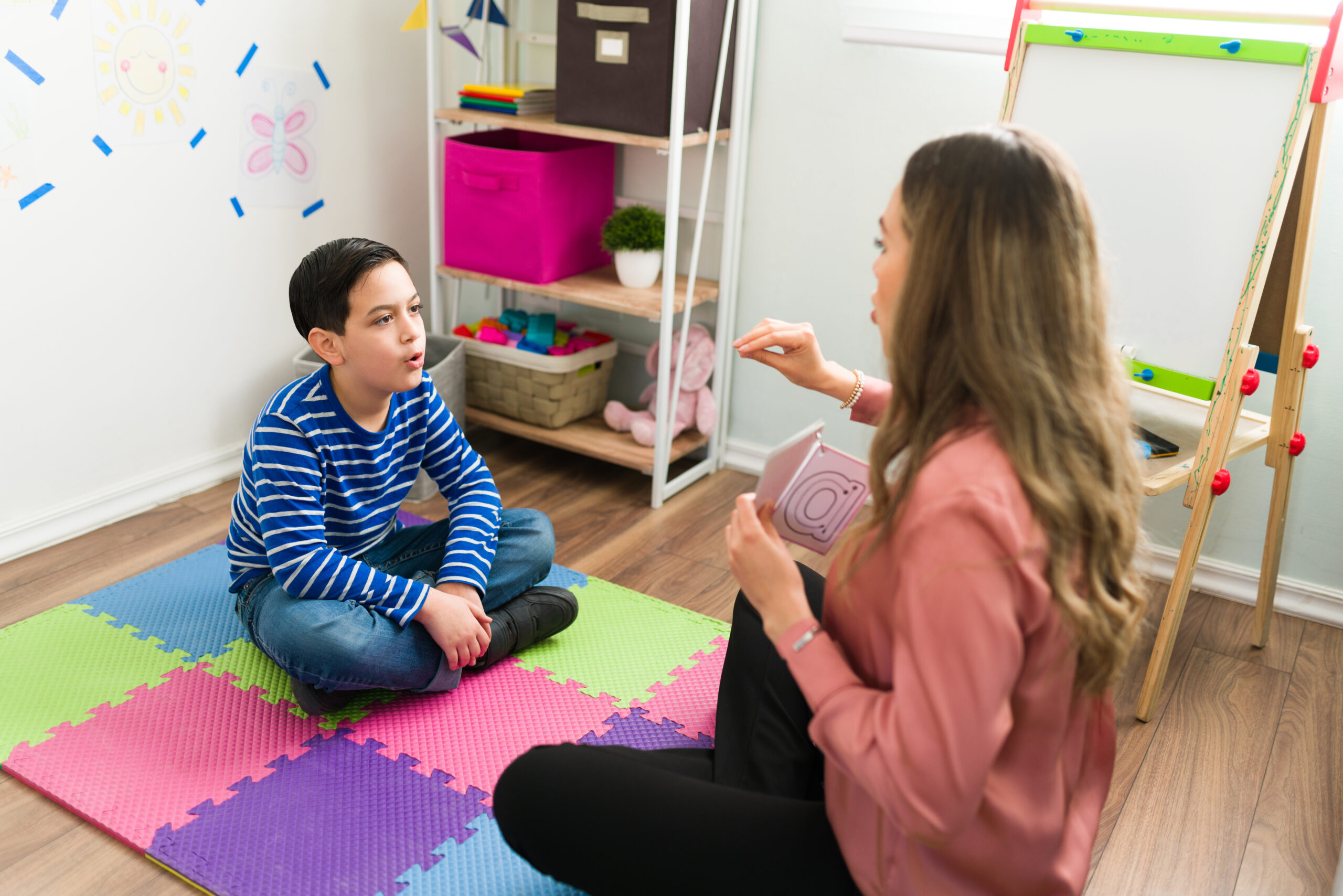
At Pragyan, therapy is designed to feel engaging, playful, and rewarding—not like a clinical chore. Every one-on-one ABA session follows a structured routine based on Natural Environment Training (NET), helping children learn meaningful skills through enjoyable activities.
🎯 Pairing & Motivation
The therapist begins by joining the child in their favorite activities, such as building blocks, coloring, puzzles, or toy trains. This creates trust, builds rapport, and helps the child develop a positive connection with the therapist and therapy environment.
🧩 Structured Skill Trials
Using positive reinforcement, the therapist works on individualized goals from the child's IEP. Activities may focus on speech imitation, identifying colors and objects, following instructions, motor planning, and other functional learning skills.
🎲 Natural Play Integration
Learning continues through play-based activities where children practice social interaction naturally—sharing toys, taking turns, requesting items, following group rules, and imitating peers in fun games.
🌟 Transition & Cool-down
The session concludes with calming activities, practicing clean-up routines, organizing materials, and smoothly transitioning back to parents. This helps children develop independence while ending every session on a positive note.


Frequently Asked Questions
Find answers to the most common questions parents ask about ABA Therapy at Pragyan Child Development Center.